97% of marketers have a content strategy, but only 47% have it formally documented https://blog.hootsuite.com/social-media-content-creation/. That gap is the core problem behind most messy calendars. A content planning process is not a brainstorm doc or a posting schedule, it's a repeatable operating system that takes goals, turns them into a plan, then into publishable assets, and finally into performance learning.
That matters because teams that write the process down can batch work more easily, keep messaging consistent, and improve posts through repeated review. It also gives small teams a way to stop improvising every week. If you need a practical standard for keeping outputs aligned with the plan, brand guardrails in AI content is a useful reference point for how teams keep quality from drifting when production speeds up.
Table of Contents
- What the Content Planning Process Actually Covers
- Setting Goals and Mapping Audience to Channels
- Turning Research Into Content Ideas That Fill Gaps
- Building an Editorial Calendar That Survives Real Life
- Batching Production and Scheduling Across Platforms
- Measuring Results and Iterating the Plan
- Practical Tips to Keep Your Planning Process on Track
What the Content Planning Process Actually Covers
A reliable content planning process connects five stages: research and ideation, strategy and planning, content creation, publishing, and analysis/optimization. Planning gives those stages structure by setting priorities, defining content pillars, and deciding how one idea becomes useful assets across several platforms.
The workflow works best as an operating system rather than a single calendar. Start with a goal, turn it into a content angle, build a core asset, then adapt that asset for each channel. A LinkedIn post, email, short video, and supporting article can share one message while using different formats, lengths, and calls to action. That modular approach reduces repeated work and leaves room for platform-specific judgment.
Why a written plan beats a verbal one
A team can share a strategy in meetings and still lose it in Slack threads, scattered notes, and changing assumptions. Writing the decisions down gives everyone a common reference for batching work, checking consistency, and reviewing what has already shipped.
Practical rule: if a decision changes the content calendar, record it somewhere the team can find in seconds.
The document does not need elaborate software. A short plan with named pillars, a publishing cadence, owners, reuse notes, and a review rhythm can keep a small team from rebuilding its process every week. For a practical view of how automation needs structure and accountability, see governance and KPIs for content teams. Clear brand guardrails in AI content also help maintain quality when several people or tools contribute to production.
The mental map to keep above your desk
Track the handoffs from ideas to intent to assets to distribution to learning. Ideation needs a plan behind it or the backlog never ships; the calendar needs a review rhythm or it becomes busy work.
A durable process separates urgent requests from repeatable content modules. That makes it easier to adjust a schedule without discarding the whole plan, adapt a strong asset for another platform, and carry useful lessons into the next planning cycle.
Setting Goals and Mapping Audience to Channels

Goals should shape the plan before a single topic gets drafted. If the team can't explain whether content is meant to drive awareness, engagement, traffic, or conversions, the calendar will fill up with posts that sound active but don't move anything. The point isn't to chase every metric, it's to define what success looks like in plain language and then make sure each content type supports it.
Turn vague aims into measurable targets
SMART framing works because it forces specificity. Instead of “grow our presence,” define the outcome in a way that can be checked later, such as increasing qualified leads, lifting site visits, or improving sign-ups. The exact metric matters less than the discipline of choosing one primary aim per cycle.
For a small business owner, that often means writing one short planning brief like this:
- Goal: build trust with prospects who don't know the brand yet.
- Primary channel: LinkedIn, because the audience already engages there.
- Secondary channel: email, because the business owns the list.
- Support channel: Instagram, because visual proof helps with credibility.
That's enough to stop the common mistake of posting everywhere without a reason.
Choose channels by audience, not habit
The easiest trap is defaulting to every platform your team already uses personally. That usually creates thin content spread too wide. A better approach is to map where the audience pays attention, then pick only the channels that fit the goal and the format.
If you're a creator or founder choosing among ten possible platforms, three is often more realistic than ten. Pick the place where discovery happens, the place where trust builds, and the place where you can convert attention into a next step. For practical examples of how channel mix affects content decisions, SleekPost's media marketing mix guide is a helpful companion read.
A copyable one-page template
Use this before brainstorming:
| Field | Fill it in |
|---|---|
| Primary business goal | |
| Primary content goal | |
| Audience segment | |
| Best platform for discovery | |
| Best platform for trust | |
| Best platform for conversion | |
| Main content format | |
| Review date |
That one page does a lot of work. It keeps the planning meeting short, prevents channel creep, and makes the rest of the calendar much easier to build.
Turning Research Into Content Ideas That Fill Gaps
Good ideas don't come from staring at an empty doc. They come from benchmarking what already ranks, spotting what's missing, and deciding where your content can say something useful that competitors haven't covered well. The most practical planning method is simple enough to repeat monthly: choose 5–10 core keywords, inspect the top five ranking pages for each, and record variables like average word count, heading structure, multimedia use, featured-snippet format, and domain authority before writing briefs https://blog.hubspot.com/marketing/competitive-analysis-kit.
Benchmark before you brainstorm
That pre-production work changes ideation from guesswork into a brief. When you know what the strongest pages look like, you stop asking, “What should we write about?” and start asking, “What angle, format, or depth is missing?” That's a much more useful question.
A simple idea-capture sheet can hold four columns:
- Keyword or topic cluster
- What the top results all have in common
- What none of them explain clearly
- What our page could do better
You don't need a giant research process. You need enough structure to keep the backlog tied to demand and gaps, not opinions in a meeting.
Use gap analysis to keep the backlog honest
Content-gap analysis is where the plan gets sharper. Map your indexed pages and posts against competitors, then look for missing topics, thin pages, and underdeveloped sections. A lot of teams discover they already have the raw material for a better answer, they just haven't organized it properly.
Keep the rule simple, if a topic already exists in the market but your version doesn't solve the user's next question, it still needs work.
That's also where editorial governance matters. If every idea gets added to the backlog without a clear purpose, the list turns into a dumping ground. A lean review process helps decide what gets written now, what gets updated, and what gets dropped. For a complementary workflow lens, content planning tool guidance can help teams connect research to execution without turning planning into extra admin.
Prioritize by effort and payoff
Not every gap deserves immediate attention. Some ideas are quick wins because they require only a rewrite or a missing section. Others need original examples, design, or coordination with another team. Rank ideas by effort versus likely value, then build the calendar around the highest-impact pieces first.
That habit keeps planning from becoming a wish list. It also makes the monthly research routine sustainable, which matters more than trying to cover everything at once. For teams that need an extra layer of oversight, content calendar for predictable growth offers a useful planning perspective on keeping ideas tied to a schedule.
Building an Editorial Calendar That Survives Real Life
A research list becomes useful only when it turns into dates, owners, and dependencies. The editorial calendar is the control panel for who briefs, who writes, who reviews, and what goes live when.
Plan far enough ahead to reduce scramble
Different teams need different planning horizons. In-house teams with steady output usually plan farther ahead than smaller businesses with limited bandwidth. The right window is the one your team can maintain consistently, not an ideal schedule that collapses under real workloads.
A useful planning range depends on the team and the cadence. One study on content marketing planning showed in-house teams often work from quarterly calendars set at least a month ahead, while mid-size and small businesses commonly plan two to three months out https://www.zebracat.ai/post/content-marketing-statistics. Read those numbers as a sign that planning needs room, not as a rule to copy.
The point is to give production enough lead time without trapping the team in stale ideas. A calendar that is too tight creates scramble. One that is too far ahead gets detached from what the audience needs now.
Build the calendar around pillars and status
A workable calendar usually starts with 3 to 5 content pillars. From there, assign posts by week, not by vague month-end intentions. Keep status labels simple, such as idea, drafting, review, scheduled, published, so everyone can see what is stuck and what is ready.
Recurring formats make this easier. If one slot is always a case study, one is always a how-to, and one is always a repurposed insight from earlier work, the calendar stops feeling empty. Repetition is not the problem here. It keeps a small team consistent without forcing new decisions every time.
A calendar works when it exposes bottlenecks early. If review always lags, fix review first instead of adding more ideas.
For teams looking at software support, a content planning tool is a practical search term, because the useful tools are the ones that show status, due dates, and ownership without adding clutter.
Keep roles explicit
Every item in the calendar should have one person accountable for each stage. Briefing, creation, review, and approval can sit with different people, but the handoffs need to be visible. Without that clarity, deadlines slip and nobody can tell where the delay started.
A clean calendar is not glamorous. It works like a shared operating system, and it protects the team from chaos when someone is out, a draft needs rewrites, or a launch date moves.
Plan far enough ahead, but leave room for adjustments. That balance is what makes a content calendar for predictable growth useful in practice.
Batching Production and Scheduling Across Platforms
Calendars usually fail during production, not planning. Each post becomes a separate project, so the team keeps restarting from a blank page. Batching changes the unit of work: one source idea becomes a set of reusable assets, giving the schedule enough material to stay active without demanding fresh ideation every day.
A realistic batching session
A practical batching session begins with one source idea and a clear list of outputs. Spend a focused block creating the main asset, then derive the platform versions while the subject is still familiar. For a team new to the method, a guide to what content batching is and how it works provides a useful starting point.
The LinkedIn version can take a sharper business angle. The Instagram caption can stay concise and support the visual. A short-form video script should put its hook near the beginning. Reuse the core idea in the form each channel expects instead of copy-pasting one message everywhere.
Templates keep this process repeatable. A standard brief, caption structure, visual checklist, and approval path reduce the decisions made for every item. The gain is especially clear in small teams, where the same person may brief, write, edit, and schedule content. Once the structure is familiar, production feels lighter because the team is filling a format rather than rebuilding one.
Customize per platform before you queue anything
Adapt each version before scheduling. Check punctuation, image crops, character limits, links, and calls to action for the destination platform. Keep the central argument consistent, then adjust the opening, format, and next step to match how people use that channel.
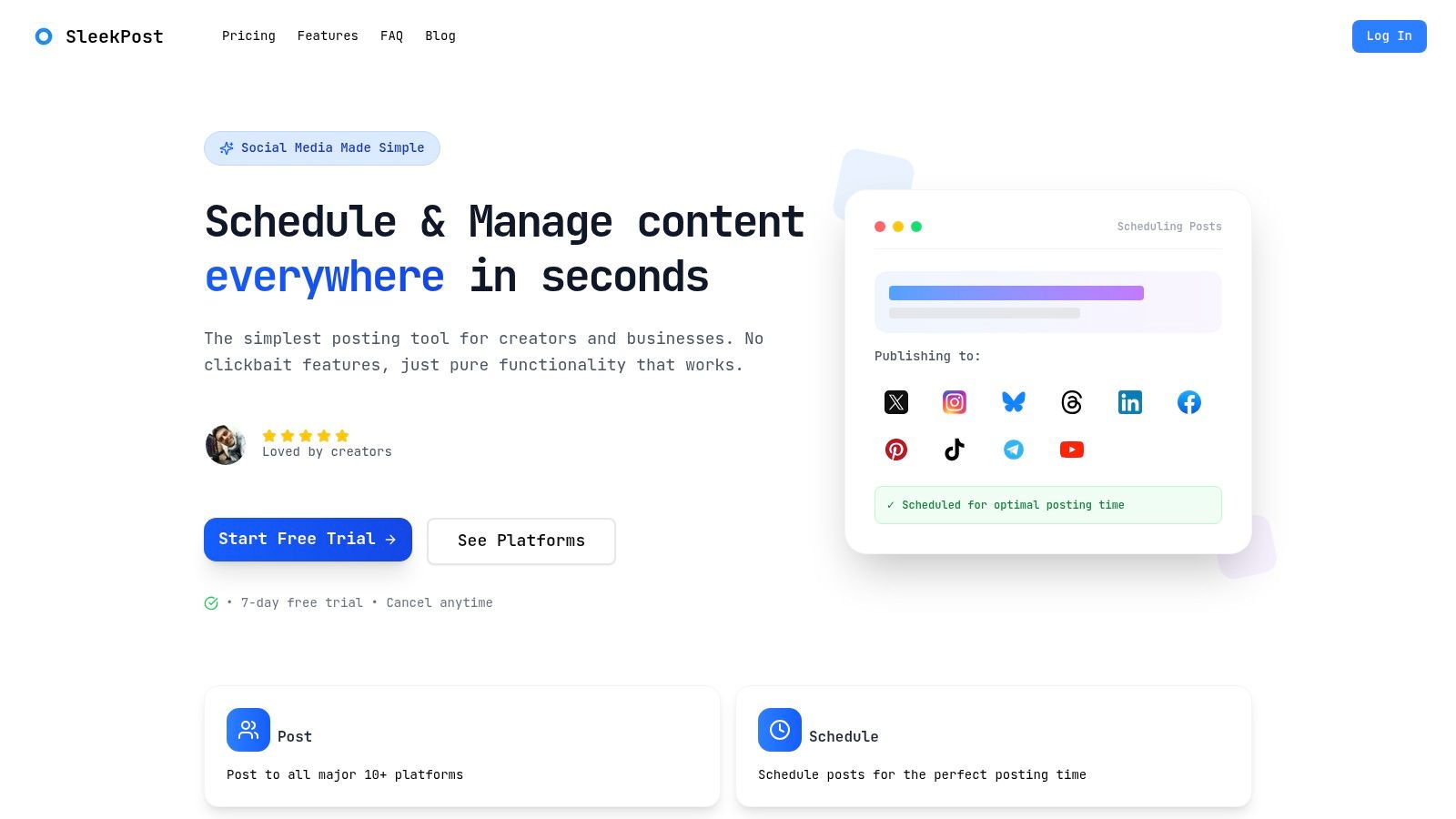
A lightweight scheduler fits after these decisions are made. SleekPost lets users schedule and publish to 10+ platforms from one dashboard, tailor copy and media per platform, queue posts for optimal times, and batch-schedule content quickly. That setup helps when the work is already prepared and the remaining risk is a messy publishing handoff.
Use scheduling to protect focus
Scheduling reduces context switching as much as it manages timing. Queue recurring posts, stagger platform versions, and leave space for last-minute edits without rebuilding the whole batch. Keep carousels, videos, reels, and text updates in separate workflow lanes when their review requirements differ.
End each session with a clean queue and a short list of open decisions. That turns planning into a production system, with reusable modules that can be adapted, approved, and scheduled without starting over.
Measuring Results and Iterating the Plan
Publishing only proves that the workflow reached the end of a cycle. The useful part comes next, when results feed the next round of decisions. A content plan should be judged by how well it helps the team learn, not by how full the calendar looked on Monday.
Measure what the goal actually asked for
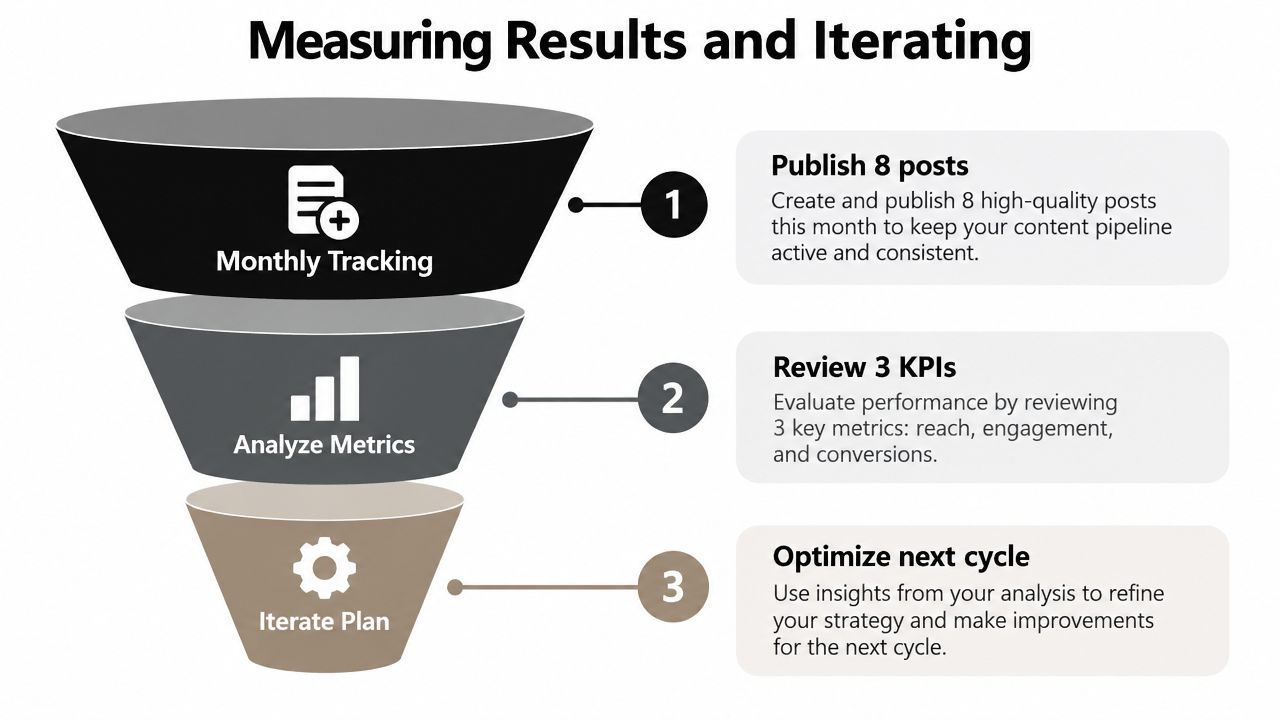
Start by tracking the metrics tied to the goals set earlier. If the goal was awareness, look at reach and visibility signals. If it was conversion, review the actions that show real intent. The mistake is measuring whatever dashboard happens to be easiest to open.
A monthly review works well because it's frequent enough to catch drift without forcing constant rework. It also gives the team a clean checkpoint for deciding what to keep, update, or retire. For a practical reporting lens, reporting best practices is a useful reference when you want the numbers to drive action instead of just fill a deck.
Use audits to prune, not just to admire winners
Quarterly content audits help you spot what's underperforming and where effort is being wasted. That's especially important if the team tends to chase vanity metrics or forgets to promote content after publishing. The plan should reserve real effort for distribution and optimization, not treat the post date as the finish line.
The modern shift is that planning is no longer linear. It's modular. Core ideas get reused, reshaped, and tested across platforms, and planning quality is increasingly measured by how quickly a team can turn one idea into multiple native versions. That's the adaptation loop now, not a neat plan-build-post-review line.
The strongest plan is the one that gets easier to improve each month.
That's also why documentation matters. If the team records what worked, what stalled, and what got repurposed successfully, the next cycle starts smarter. The calendar becomes a living system instead of a static artifact.
Practical Tips to Keep Your Planning Process on Track
Start with one fixed planning block each week. If strategic work only happens when everyone feels free, it won't happen consistently. Keep the block short, decide what moves forward, and write down the next action before the meeting ends.
Don't treat publishing as the finish line. Reserve time for distribution, follow-up, and a quick review of what landed well. Teams that ignore promotion usually blame the content when the process was the actual issue.
If you're a solo creator or a tiny team, shrink the horizon until it's realistic. A smaller calendar you can maintain beats a larger one you abandon by Wednesday. Review the plan on a fixed cadence so it doesn't drift into a pile of old ideas.
Run one full cycle before judging the process. That means one round of goal setting, research, planning, batching, publishing, and review, then a clean decision about what to keep.
SleekPost helps turn a content plan into scheduled posts across multiple platforms from one dashboard, with per-platform customization and batch scheduling built in. If you want a lighter way to move from calendar to publishable assets without juggling tabs all day, visit SleekPost and see how it fits into your workflow.